National curriculum
MoE / NCERT
AI & Computational Thinking, Class 3 onwards from 2026–27 — mapped week by week.
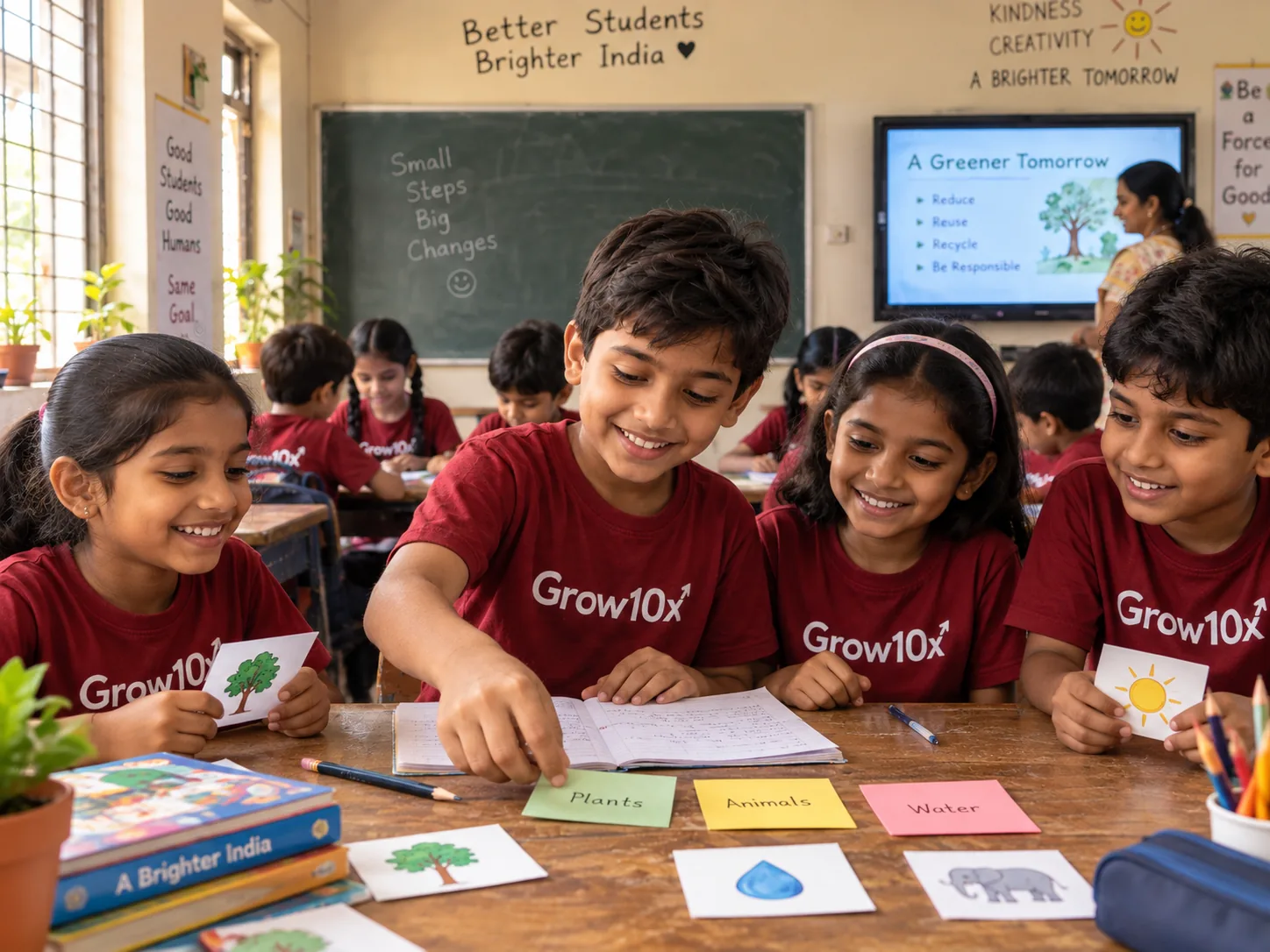
AI that helps students learn — not AI that learns for them.
One method taught four ways, from Class 3 to Class 12. Built for the AI and Computational Thinking curriculum every Indian school takes on in 2026–27.
Shiksha is in classrooms now, not on a slide. Both pilots are in Bijnor, Uttar Pradesh, running the AI Scouts pathway with Classes 3–5.
Bring it to your schoolBijnor, Uttar Pradesh
AI Scouts · Classes 3–5
Bijnor, Uttar Pradesh
AI Scouts · Classes 3–5
AI & Computational Thinking, Class 3 onwards from 2026–27 — mapped week by week.
Activity-based and discovery-led. Seven in ten activity minutes use no screen.
Consent and no tracking — met by collecting no personal data at all.
Five Big Ideas and the AI Competency Framework — one of each, every week.
The Ministry of Education announced it on 30 October 2025. Every school now has a Classes 3–5 question to answer — and almost nothing on the market is built for that age.
MoE announces the curriculum
Handbooks and NISHTHA training
Curriculum live, Class 3 upward
Ready for it?
Real-world examples and ethics, embedded in The World Around Us.
Where Shiksha starts
Responsible use of AI tools, bias, and ethical decision-making.
Data handling, model building and Python programming.
Most school AI programmes are built for teenagers and pushed downward. For Classes 3–5 that is not a matter of taste — the law, the research and the child each rule it out independently.
The DPDP Act 2023 requires verifiable parental consent and bars tracking or targeted advertising aimed at children. Mainstream AI assistants separately bar independent use below 13.
DPDP Act 2023
Peer-reviewed work on primary AI literacy finds that mixing unplugged with plugged activity outperforms screen-only teaching at this age.
NCF-SE 2023 · peer-reviewed studies
Paediatric guidance in India puts 5–10 year olds under two hours of daily screen exposure, and says it must not displace study, play, sleep or family time.
Indian Academy of Paediatrics
Not a smaller version of a teenage AI course — the only design left standing. It happens to be the one the research says teaches best.
One supervised class access point, operated by an adult.
Seven in ten activity minutes are unplugged.
Nothing at home needs a device.
A whole week of Shiksha costs about an eighth of a single day’s paediatric screen allowance — and none of it is at home.
Each pathway keeps the same discipline — attempt first, verify always, own the work — and hands the learner more of it. What changes is who holds the keyboard, and how much the project has to survive.
Notice, ask, check, make. Unplugged-first literacy, safety and fairness.
Start hereDiscover and create. Guided explanation, recall, and a supervised mini-project.
Study, investigate and publish responsibly. Revision, fact-checking, a no-code build.
Prepare, automate and build. Exam systems, agentic workflows, portfolio projects.
Board-aware, not board-affiliated. Schools may adapt any pathway for CBSE, CISCE/ICSE, IB or State Board contexts. Shiksha claims no board approval, endorsement, or replacement of any syllabus.
Four pathways, one method. Each runs two guided sessions a week, and each ends with the learner explaining something they built and naming what went wrong. Pick a class group to read its full week-by-week.
The ground floor. Unplugged-first AI literacy, safety and fairness, built around the AI and Computational Thinking curriculum that begins at Class 3 from 2026–27.
“I can spot AI around me, ask a careful question, check whether an answer is true, and make one small thing I can explain.”
Reading for evidence, explaining in full sentences, sorting and classifying, patterns, cause and effect, new vocabulary.
Paper-first logic, a storyboarded mini-project, five test cases and one honest failure — built with an adult at the keyboard.
The Never-Share list written and signed by the class, the Check-It Rule, and a trusted adult named by every child.
Recognise AI in an ordinary Indian day — maps, translation, recommendations, fingerprint locks — and separate it from a machine that just follows a switch.
My AI Map + spoken reasons
Sequence, pattern and simple algorithms without a computer. One child instructs another who may only obey literally, and the class hunts the missing step.
Rule card + pattern sheet
How a machine learns from examples — and how deliberately unfair examples produce a deliberately unfair machine.
Labelled example set + prediction
The Question Ladder: a vague wish climbed rung by rung into a precise question that sets length, audience and format.
Question ladder sheet
The pivot of the pathway. A machine sounds certain and is wrong; the class catches it against their own textbook and cheers.
Mistake hunt log + verdict
Role-play refusal: a friendly bot asks for name, school, address, a photo, a password. Children practise saying no and naming a trusted adult.
Signed Never-Share list
Who does a tool leave out? Drawings first, discussion second — then two genuinely useful public-good demonstrations.
Fairness card
Paper plan approved first. The group directs, the adult executes, five cases are tested, one failure is recorded.
Storyboard + tested build + 60-second demo
Peer feedback on one confusing part, then fix exactly one thing. No group rebuilds from scratch.
Before / after record
Every child speaks for sixty seconds, and the class reads its own Never-Share list aloud to the parents.
Reflection page
Ten questions on a chapter they have studied, answers checked against the textbook.
A six-panel comic explaining one concept to a younger child.
A paper classifier with the rule written out and the tricky cases listed.
One page teaching the whole school a rule they have mastered.
No student accounts and no personal data. The teacher operates the only screen; children direct but never type. About fifteen minutes of shared display per week.
Optional weeks deepen the build and the showcase. Schools may compress the calendar, but not the total guided hours, the paper-planning stage, or project-testing time.
The younger pathway learns five words it can chant. The older pathways run the same logic as a six-step study cycle. Nothing has to be unlearned when a learner moves up.
The child writes or draws their own answer first, on paper — even if it is “I do not know yet.”
The class turns a vague wish into one precise question. The teacher types it exactly as dictated.
Tested against the textbook, the teacher, or a trusted grown-up — right, half-right, or confidently wrong.
Something small — on paper first, then built with the adult at the keyboard.
Sixty seconds: what I did, what the machine did, and one thing that went wrong.
The pencil goes first. The machine goes second.
The same discipline, with the learner responsible for verification rather than the teacher.
Begin with the learner's own thinking, notes or first answer.
Use a precise question: explain, compare, quiz, hint or challenge.
Restate the idea in the learner's own words.
Check against the textbook, teacher guidance or a trusted source.
Use recall questions, examples and spaced revision.
Teach it back, and record what remains unclear.
Simplify without oversimplifying.
Ask for hints and reasoning, not final answers.
Turn notes into concise recall material.
Create and evaluate questions at the right level.
Compare sources and flag unsupported claims.
Break goals into realistic study actions.
Explain, present and reflect clearly.
Build tools that support a real learner need.
Most of what gets sold to schools as “AI” is a coding class, a robotics kit, or a licence. This is none of those — and the differences are the whole argument.
Programming appears at Grades 9–12, where the national curriculum puts it.
Instead
Judgement about machines, long before syntax.
Nothing to purchase per child, nothing that breaks, nothing that needs a lab.
Instead
Cards, paper and a classroom floor — eleven of twelve activities need no power.
No engagement scores, no streaks, no notifications, no child logging in.
Instead
A paper log the child fills in, and takes home at the end.
Nothing is submitted automatically, and no output is accepted as fact.
Instead
The learner's own attempt, first, in every single session.
It is not lying to you. It does not know that it does not know.
Both session types run to a fixed shape, so a class teacher can predict them, observe them, and eventually deliver them without us.
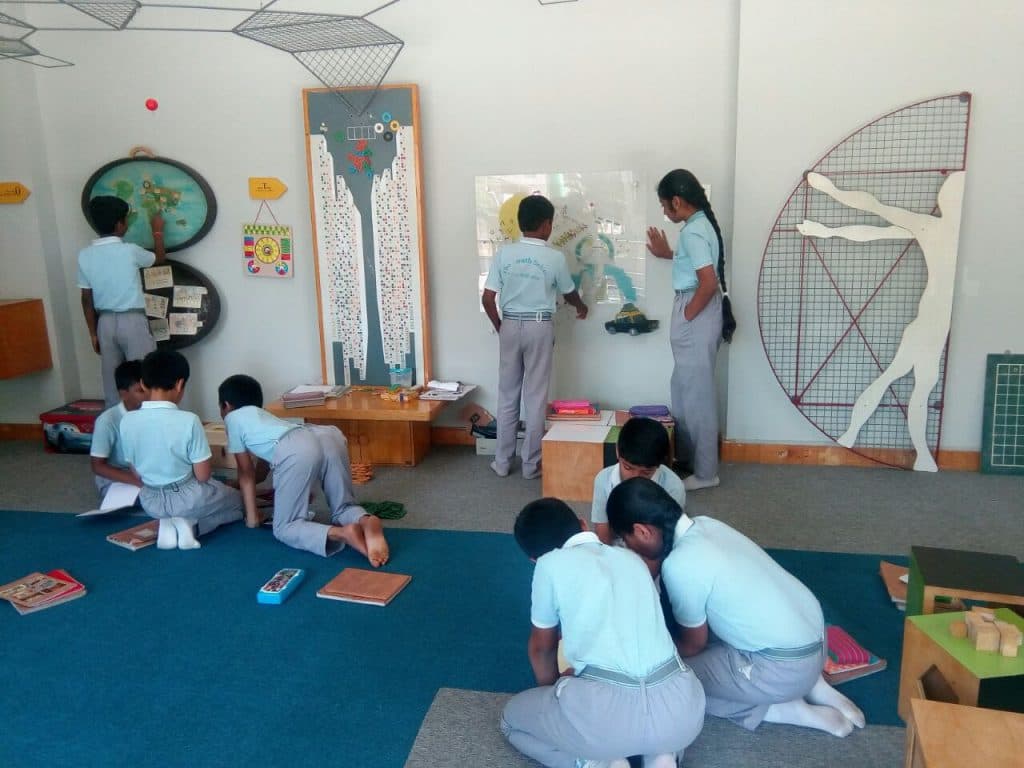
No child touches a device during the demonstration.
Nothing appears on screen that has not been spoken.
School staff sit at the back, able to stop the session instantly.
Eleven of twelve activities need no electricity.
These are not a disclaimer at the back of a document. They are the operating conditions of the programme. If a rule cannot be met in a school, the cohort does not run there until it can.
No child creates or logs into an account on any AI service. One supervised class access point, operated by an adult.
The adult types. In Week 8 the group instructs and the adult executes. Children direct; they do not operate.
No name, school, address, photo, phone, roll number or Aadhaar is entered anywhere. Projects use invented characters.
The child's own attempt is on paper before any machine speaks. A facilitator who skips this has breached the method.
One display, facing the room. No private screens, no headphones, no session behind a closed door.
Every prompt typed and every answer received is voiced by the adult. Nothing enters the room silently.
Scripted, rehearsed and cleared with the school coordinator beforehand. No improvised prompting in front of children.
If anything unexpected appears, the display goes off first. Logged and reported to the school the same day.
A Grow10X facilitator and a school staff member, together, every session. The school member holds unconditional stop authority.
No machine output is treated as fact until checked against the textbook, the teacher, or a trusted adult.
No product, brand offer, app or lead capture reaches a child, or travels through a child to a parent.
Where anything here conflicts with the school's own honesty, device or child-protection policy, the school's policy takes precedence.
If an activity cannot be run with the screen facing the whole room and every word spoken aloud, it does not belong in a Classes 3–5 classroom.
The DPDP Act 2023 and Rules 2025 require verifiable parental consent before a child's personal data is processed, and prohibit tracking and targeted advertising aimed at children. This programme is designed so the simplest compliance route is also the best pedagogy.
Nothing digital.
One paper log, kept in the classroom and taken home afterwards. One attendance sheet, held by the school. That is the complete record.
No image, video or identifiable work is published or shared without separate written parental consent obtained by the school for that specific use. Consent to participate is never treated as consent to publish.
From Grade 5 upward, work is weighted across five areas. In Classes 3–5 the same five areas are used, but described in words — no marks, no rank, no comparison between children.
The programme is designed to strengthen understanding, habits and confidence. It does not promise a particular school or examination result — and a learner who reports a failure clearly is assessed higher than one with a smooth demo and nothing to report.
If an outcome cannot be noticed at home without being announced, it does not belong in a Classes 3–5 programme.
Each week is tied to a live Classes 3–5 outcome: reading for evidence, explaining in full sentences, sorting, patterns, cause and effect.
At home: The child explains instead of repeating.
The Try First rule is absolute — the child's own attempt goes on paper before any machine speaks.
At home: “But how do you know?”
One rule a child can actually use: my name, school, address, photo, family's money and any password never get typed into a machine.
At home: Refuses a form, and says why.
No home screen work at all, and about fifteen minutes in class. Children also learn to name their own screen habits.
At home: Notices their own screen use.
Who does a tool leave out — the classmate who cannot see, the grandparent who speaks only Marathi? This is the national curriculum's own theme.
At home: Argues about what is fair.
Five minutes a week: plan a little, wait a little, protect what matters, tell a trusted adult. No product is ever mentioned to a child.
At home: Plans before starting.
Answered straight, including the noes.
By the end of eight weeks one of your own teachers should be able to run the pathway again with the next Class 3 batch, unaided. That is the design goal, not a bonus.
The five-step method, the twelve non-negotiables, the exclusion list, the data position, and a walk-through of the learning log.
The facilitator leads. Your class teacher runs the Think Ahead minute from Week 2, and one unplugged activity from Week 3.
Your teacher leads the Wonder Circle; the facilitator leads the Discovery Lab and holds the keyboard. Reversed by Week 8 where the teacher is ready.
The school keeps the twelve activity cards, the session scripts, the take-home set, the rubric and the log master.
The facilitator pack uses the same vocabulary as the NISHTHA teacher-training modules and the NCERT handbooks prepared alongside the national rollout — so a teacher trained here is not learning a second, competing language.
These are preconditions, not preferences. We would rather lose a cohort than run one badly at this age.
16 sessions across 8 weeks — a 35-minute circle and a 45-minute lab each week. About 11 guided hours.
Up to 30 children per facilitator, seated in groups of five. A combined Classes 3–5 cohort works.
An ordinary classroom with movable seating for a circle and group work, and one display facing the room.
A browser on one teacher machine, on the school's own network behind the school's own content filter.
A trained facilitator plus a designated school coordinator in every session, with stop authority. Ideally the class teacher.
Scheduled away from your examination weeks. Testing time and the showcase are booked before the cohort starts.
School selection, a device and filter audit, consent forms and the demonstration list approved, facilitators briefed on your child-protection policy.
Letter issued and a parent orientation held before any child begins. Half-day teacher orientation. Consents collected by your office.
A single cohort of up to 30 children runs the full core, the teacher moving from observing to co-delivering. Any incident reported same-day.
Evidence reviewed against the pilot indicators; teachers, coordinator and a sample of parents surveyed. What failed is written down before anything is repeated.
Where we are honest: AI Scouts is a pilot-stage programme. It has not yet run a full cohort, so we publish no completion statistics and make no claims about results. The success thresholds we work to are targets set from the delivery model — and we will tell you what missed them.
We would rather run one cohort properly and show you what failed than sell you a rollout. Tell us about your school and we will send the full curriculum pack — all eight weeks, the session scripts, the safety rules and the parent letter you can send home.